
CarbonLoop knowledge hub
Understand carbon.
One topic at a time.
Practical guides to product footprints, supplier data, company emissions and carbon credits. Choose a topic, start with its cornerstone guide, or find the article that answers your question.
Practical guides to explore.
Choose your starting point
Explore guides by topic.
Each topic brings together a cornerstone guide and related resources, so you can move from the foundations to the detail you need.
Inside CarbonLoop
 Explore topic
What you’ll find
News, guides and ideas from CarbonLoop.
Company news, practical guides, vlogs, videos and product updates. Get to know the team, see the platform in action and follow what we’re building.
- Company news and product updates
- Practical guides and platform walkthroughs
- Videos, vlogs and ideas from our team
Product carbon footprints
 Explore topic
What you’ll learn
Promotional merchandise and product carbon footprints
Carbon footprint labels on products can communicate a calculated greenhouse-gas result or a particular scheme claim. To interpret one, identify the product quantity, life-cycle boundary and …
- Set a useful calculation boundary
- Follow the product’s life cycle
- Interpret comparisons and claims
13 guides
Start hereHow Do You Calculate Carbon Footprint of a Product? A Practical Method- Carbon footprint labels on products: what the number really tells you
- Life Cycle Assessment vs Product Carbon Footprint: Which Study Do You Need?
- Product carbon footprint calculation example for one packed bottle
SKU, BOM & supplier data
 Explore topic
What you’ll learn
SKU, BOM and supplier carbon data
A SKU carbon footprint is a greenhouse-gas result for a defined sellable product configuration, not a number attached to a stock code forever. The code may identify a size, material, colour,…
- Structure the product and BOM
- Ask suppliers for usable evidence
- Manage product and material changes
11 guides
Start hereSKU Carbon Footprint: Build a Result That Survives a Product Revision- What Percentage of a Product Carbon Footprint Comes From Materials and Manufacturing?
- Supplier carbon data portal guide for requesting and reviewing evidence
- Supplier Carbon Emissions: Ask for Data You Can Actually Use
Reports, labels & proof
 Explore topic
What you’ll learn
Product carbon reporting and customer-facing proof
A carbon footprint verification certificate is evidence about a defined assessment, not a transferable approval badge. Its usefulness depends on the product result the independent opinion co…
- Understand the result and its scope
- Build a useful customer report
- Distinguish evidence from claims
7 guides
Start hereProduct Carbon Footprint Report Template: What a Credible Report Needs- Carbon Footprint Verification Certificate: Check the Opinion, Product and Report
- Carbon Neutral Product Labels: What Must the Claim Prove?
- Product carbon footprint disclosure: what to share and what to qualify
Company carbon accounting
 Explore topic
What you’ll learn
Company carbon accounting and emissions management
Carbon accounting and financial accounting can begin with the same invoice and still produce different records. Finance asks how a transaction affects money, assets, liabilities or performan…
- Understand scopes and boundaries
- Organise activity data and calculations
- Prepare and use emissions reports
27 guides
Start hereHow Does Carbon Accounting Work? From Boundary to Auditable Inventory- Carbon Accounting vs Financial Accounting: Where the Records Meet and Diverge
- Carbon Emissions Definition: Physical Sources and What the Numbers Mean
- Corporate Carbon Emission Statements: What a Credible Report Needs to Show
Scope 1: direct emissions
 Explore topic
What you’ll learn
Scope 1 direct emissions and fuel combustion
Fugitive emissions examples include refrigerant escaping from a cooling system, greenhouse-gas fire suppressant released during a discharge, SF₆ lost from electrical equipment and methane le…
- Identify direct emission sources
- Calculate fuel and refrigerant emissions
- Keep source records and review controls
Scope 2: purchased energy
 Explore topic
What you’ll learn
Scope 2 electricity and purchased energy emissions
An electricity carbon footprint attributes emissions to a defined amount of electricity use. For a company's purchased electricity, the basic calculation is activity multiplied by a suit…
- Define the purchased-energy boundary
- Compare location and market methods
- Check energy certificates and claims
Freight & distribution
 Explore topic
What you’ll learn
Upstream freight and distribution carbon emissions
A logistics emissions calculation becomes useful when the reader can see which movements it covers, how each result was obtained and what remains missing. Start with the physical shipment ch…
- Identify transport legs and modes
- Choose suitable activity data and factors
- Review shipment boundaries and results
11 guides
Start hereFreight Carbon Footprint: Build a Result You Can Trace to the Shipment- Scope 3 Category 4 upstream transportation and distribution examples
- How to choose logistics emission factors that fit the activity
- Logistics Emissions Calculation: A Defensible Method for Every Transport Leg
Business travel
 Explore topic
What you’ll learn
Business travel and operational Scope 3 emissions
An air travel carbon emissions calculator gives an estimate for an itinerary under a particular method. It does not measure a personal exhaust plume, and the number is incomplete without its…
- Understand business-travel boundaries
- Collect trip and accommodation data
- Compare journeys on a consistent basis
7 guides
Start hereBusiness Travel Emissions: Build a Defensible Trip-Level Inventory- Plane vs Train Carbon Footprint: Compare the Same Journey, Not a Headline Percentage
- Scope 3 Category 6: what counts as business travel?
- Air Travel Carbon Emissions Calculator: Inputs, Assumptions and Results
Waste & wastewater
 Explore topic
What you’ll learn
Waste generated in operations carbon emissions
Landfill emissions data is useful only when the number stays connected to its source, period, method and physical coverage. A facility-reported annual estimate, a landfill gas project record…
- Define waste and treatment boundaries
- Match materials to suitable factors
- Interpret landfill and wastewater data
12 guides
Start hereScope 3 Waste Generated in Operations: A Practical Category 5 Inventory- Landfill emissions calculation: choose the right boundary before the formula
- Landfill Emissions Data: What the Numbers Can and Cannot Tell You
- Recycling Emissions Factor: Match the Material, Process and Boundary
Carbon credits & offsetting
 Explore topic
What you’ll learn
Business carbon credits, offsetting and certificates
Biochar carbon credits are purchased as a claim about measured and verified carbon removal, not simply as a purchase of black carbon-rich material.…
- Follow credits from project to retirement
- Review project and unit evidence
- Keep credit use separate from reductions
Article library
Find the guidance you need.
151 articles across 10 topics, plus our Carbon Calculator overview.
151 articles
Business carbon credits, offsetting and certificates
California voluntary carbon market disclosures: a dated evidence guide
California's voluntary carbon market disclosures can be easier to understand when you separate three questions: what supports the offset project, what connects an offset to its purchaser's c…
Read articleBusiness carbon credits, offsetting and certificates
AB1305 voluntary carbon market disclosures: building a reviewable evidence file
A carbon-credit invoice, a project report and a company emissions statement belong in the same review conversation, but they answer different questions. Treating them as interchangeable can …
Read article
Company carbon accounting and emissions management
Accounting for Carbon Offsets Under US GAAP: What Topic 818 Changes
Buying an offset does not, by itself, answer whether the purchase belongs on a US GAAP balance sheet. The instrument must fall within the accounting guidance, the entity must establish which…
Read article
Business carbon credits, offsetting and certificates
How Many Companies Buy Carbon Credits? What the Evidence Can Count
The research reviewed here does not establish a verified worldwide total of companies currently buying carbon credits. It does establish narrower findings: a May 2024 working paper identifie…
Read article
Business carbon credits, offsetting and certificates
Article 6.4 and the Voluntary Carbon Market: What a Buyer Must Verify
Article 6.4 creates a specific Paris Agreement crediting mechanism, not a new name for every voluntary carbon credit. For a corporate buyer, the useful question is whether the exact activity…
Read article
Business carbon credits, offsetting and certificates
UK Voluntary Carbon Market: A Buyer’s Guide to Rules and Units
For a business using the voluntary carbon market in the UK, two checks matter before a purchase or public claim: what the relevant policy document actually establishes, and what the exact un…
Read article
Company carbon accounting and emissions management
EU Corporate Sustainability Reporting Directive: Scope, Carbon Data and Current Rules
The EU corporate sustainability reporting directive is a framework for sustainability information from covered undertakings—not a requirement for every business to publish a carbon inventory…
Read article
Business carbon credits, offsetting and certificates
Carbon Neutral Businesses: What a Company-Wide Claim Must Show
A carbon-neutral business claim needs a defined subject, reporting year and evidence boundary. The reviewer should be able to trace that subject through a gross emissions inventory, document…
Read article
Company carbon accounting and emissions management
How Many Companies Report Carbon Emissions? Read the Population Behind the Count
CDP reports that over 22,100 companies disclosed environmental data through its platform in 2025. That is a useful measure of participation in one channel. The worldwide number of companies …
Read article
Waste generated in operations carbon emissions
Waste Reduction and Carbon Footprint: Prove the Benefit Before Claiming It
A waste reduction carbon footprint project needs two tests: did it preserve the useful service while changing material use, and did that change reduce emissions across the relevant boundary?…
Read article
Business carbon credits, offsetting and certificates
Carbon offset providers: how to choose one you can scrutinise
Choose carbon offset providers by the transaction you can examine: the offered units, the accountable seller, the delivery terms and the evidence for retirement. Then review the intended cli…
Read article
Business carbon credits, offsetting and certificates
How Many Carbon Credits Per Acre of Trees? Why There Is No Fixed Rate
There is no fixed number of carbon credits per acre of trees. An acreage figure describes land, while a credit usually represents an issued tonne of carbon dioxide equivalent under a particu…
Read article
Business carbon credits, offsetting and certificates
Brazil’s Voluntary Carbon Market: What Buyers Should Check Now
A company buying credits from Brazil needs to distinguish an existing voluntary project credit from an instrument recognised within Brazil’s regulated emissions-trading system. Brazilian loc…
Read article
Business carbon credits, offsetting and certificates
Who are carbon credits paid to? Trace the money, not just the credit
Carbon-credit payments go first to the seller or authorised collection intermediary specified in the transaction documents. That may be a project developer, a rights-holder, a trader or a re…
Read article
Business carbon credits, offsetting and certificates
Singapore Voluntary Carbon Market: Separate Credits, Tax Use and Claims
A Singapore company can buy carbon credits voluntarily without buying units eligible for Singapore carbon-tax use. These are different routes with different evidence requirements. Begin with…
Read article
Business carbon credits, offsetting and certificates
Canada’s Voluntary Carbon Market: Choose the Right Credit for the Job
A credit offered in Canada is not automatically a credit your organisation can use for its intended purpose. The useful starting question is not whether the seller calls it “Canadian” or “vo…
Read article
Business carbon credits, offsetting and certificates
Voluntary carbon market price history: reading the 2021-2024 reported averages
Ecosystem Marketplace’s reported annual averages provide a bounded view of voluntary carbon market price history for 2021–2024. They show a higher reported average in 2022 than in 2021, foll…
Read article
Business carbon credits, offsetting and certificates
China’s voluntary carbon market: follow a CCER from project to use
A seller sends you a project registration record and asks whether your company can buy and use its carbon credits. The record may identify a registered project, but it does not tell you whet…
Read article
Business carbon credits, offsetting and certificates
Types of Carbon Credits: Classify the Outcome Before the Project
The most useful types of carbon credits describe either emissions avoided or reduced against a baseline, or carbon removed from the atmosphere and stored. A second question identifies the pa…
Read article
Business carbon credits, offsetting and certificates
Is the voluntary carbon market regulated? An activity-by-activity guide
The voluntary carbon market involves several kinds of rules, each answering a different question. Choosing to buy credits voluntarily does not settle the law governing a transaction, a publi…
Read article
Waste generated in operations carbon emissions
How to choose a landfill emission factor for a waste stream
A landfill emission factor estimates greenhouse gas emissions per unit of a specified waste stream sent to landfill under a defined method. To use it, match the waste type, disposal route, g…
Read article
Business carbon credits, offsetting and certificates
Carbon credit vs carbon offset and what a buyer can claim
A project-based carbon credit is a unit issued under a crediting programme. It commonly represents one metric tonne of carbon dioxide equivalent, or CO₂e, of verified emissions reduction, av…
Read article
Business carbon credits, offsetting and certificates
Renewable energy credits market and what buyers can claim
The U.S. renewable energy credits market lets businesses acquire the attributes of renewable electricity generation. A renewable energy certificate, or REC, typically represents the attribut…
Read article
Waste generated in operations carbon emissions
How Much Carbon Emissions Come From Waste? Read the Denominator First
Start with the boundary. The UN Environment Programme's March 2024 public summary puts food loss and waste at 8–10% of annual global greenhouse gas emissions. That estimate concerns the …
Read article
Business carbon credits, offsetting and certificates
Are Companies Required to Buy Carbon Credits? A Practical Compliance Guide
Companies generally choose whether to buy voluntary project credits. A statutory duty arises when a named programme covers the relevant legal entity, facility or operator and requires a spec…
Read article
Business carbon credits, offsetting and certificates
How Much Do Companies Pay for Carbon Credits? A Buyer Budget Guide
Companies pay the price agreed for a specified credit purchase, plus the charges and risks attached to getting the intended units delivered and retired. There is no single per-tonne number t…
Read article
Upstream freight and distribution carbon emissions
Transport Emissions Factors: Choose a Number That Fits the Shipment
Start with the shipment record, then choose a transport emissions factor whose denominator and energy boundary match it. A freight record showing cargo mass and distance can support tonne-ki…
Read article
Business carbon credits, offsetting and certificates
United States carbon credits: choose the market and the unit
United States carbon credits can refer to instruments with different issuers, units and purposes. A voluntary project credit is not the same as a compliance allowance, an offset accepted by …
Read article
SKU, BOM and supplier carbon data
Packaging Carbon Footprint Calculator: Check the Inputs Before Trusting the Number
A packaging carbon footprint calculator is useful when you can reproduce what it counts. Start with the package specification, then check the mass, activities, emission factors and life stag…
Read article
Promotional merchandise and product carbon footprints
Product Carbon Footprint vs LCA: Which Study Answers Your Decision?
A product carbon footprint, or PCF, answers a climate question for a defined product or service. It expresses greenhouse gas impacts in carbon dioxide equivalent for a stated unit and bounda…
Read article
Promotional merchandise and product carbon footprints
Carbon Footprint of Promotional Products: What the 2026 Study Can and Cannot Tell You
The carbon footprint of a promotional product depends on the specified item, its production and delivery, and the use and disposal assumptions in its calculation. An industry advertising stu…
Read article
Business carbon credits, offsetting and certificates
How a Carbon-Credit Business Model Works: Rights, Delivery and Cash
A carbon-credit project can spend money long before it has an issued unit to sell. A broker may earn a fee without developing a project, while a trader may buy units and take inventory risk.…
Read article
Upstream freight and distribution carbon emissions
Air Freight CO2 Emissions Calculator: Use and Check the Result
An air freight CO2 emissions calculator can help estimate a shipment's transport footprint, but a useful result is more than a number beside an airport pair. The shipper needs to know wh…
Read article
Business carbon credits, offsetting and certificates
Carbon Neutral Certification for Small Business: A Decision Guide
Carbon neutral certification for small business is not a single badge that every company earns by buying a fixed number of offsets. A business chooses a specific scheme, defines exactly what…
Read article
Business carbon credits, offsetting and certificates
CORSIA Carbon Credits: Airline Eligibility and Evidence Guide
CORSIA carbon credits are useful to an airline only when the particular emissions units meet the applicable scheme conditions and their cancellation is evidenced for the intended use. A reco…
Read article
Waste generated in operations carbon emissions
Waste disposal carbon footprint: calculate the inventory and compare routes separately
Calculate a waste disposal carbon footprint from the waste your operations generated, its actual treatment and the emissions attributable to that treatment. For third-party treatment, the re…
Read article
Business carbon credits, offsetting and certificates
When Did Carbon Credits Start? Key Dates That Mean Different Things
When did carbon credits start? There is no single honest year until you specify the instrument. Emissions-offset ideas appeared in United States air-pollution policy in the 1970s. An early c…
Read article
Waste generated in operations carbon emissions
Landfill Emissions Calculator: Choose the Right Model Before Entering Data
A landfill emissions calculator is useful only when its output answers your business question. A site-gas model, a landfill-gas energy benefit, a company waste estimate and a diversion scena…
Read article
Business carbon credits, offsetting and certificates
How do you verify carbon credits? Reconcile the project evidence
How do you verify carbon credits when the seller sends a monitoring report and calls the result verified? Follow the evidence for the particular project and period. A developer prepares the …
Read article
SKU, BOM and supplier carbon data
Tier 2 Supplier Carbon Data: What to Request and How to Use It
Tier 2 supplier carbon data is useful when it explains an upstream input that your current purchase estimate represents poorly. Its value depends on where it belongs in the calculation. Rece…
Read article
SKU, BOM and supplier carbon data
Product Carbon Footprint Data Sharing: What Suppliers and Buyers Must Exchange
A product carbon footprint can be measured carefully and still become unusable when it is passed to another company without context. A buyer needs more than a number in kilograms of CO2e. It…
Read article
Upstream freight and distribution carbon emissions
Upstream vs Downstream Transportation Scope 3: Category 4 or 9?
A truck leaving your factory is moving outward, but its emissions are not automatically Scope 3 Category 9. If your company buys that third-party delivery service, it belongs in the Category…
Read article
Business carbon credits, offsetting and certificates
Voluntary vs Compliance Carbon Markets: Which Rules and Units Apply?
A company has an emissions inventory, a credit purchase proposal and a question from its board: does buying the unit meet an obligation, support a voluntary climate contribution, or both? Th…
Read article
Company carbon accounting and emissions management
Carbon Accounting Software vs Excel: When Is a Spreadsheet Enough?
An annual carbon workbook produces a total everyone can repeat. Then a second factory opens, a supplier corrects an estimate, and an assurance reviewer asks which source and factor produced …
Read article
Company carbon accounting and emissions management
Carbon Accounting Software Cost: Build a Budget You Can Actually Compare
A sustainability manager asks three vendors for a carbon accounting platform. One responds with a published annual fee. Another quotes a price after a discovery call. A third offers a low en…
Read article
Business carbon credits, offsetting and certificates
How Voluntary Carbon Markets Can Support Climate Ambition
Voluntary carbon markets can support climate ambition when credit finance helps activities deliver additional emissions reductions or removals outside a buyer’s value chain. That contributio…
Read article
SKU, BOM and supplier carbon data
Carbon Footprint of Packaging Materials: Compare the Whole Pack, Not Just the Material
A paper wrap can have a lower production factor per kilogram than a plastic wrap and still produce a worse result for a particular shipment. It may need more mass, an added moisture barrier,…
Read article
Business carbon credits, offsetting and certificates
Voluntary Carbon Market Corresponding Adjustments: What Buyers Must Check
A voluntary carbon market corresponding adjustment is a country-accounting issue, not a shortcut to choosing a good credit. When a host country authorizes a mitigation outcome for a covered …
Read article
Business carbon credits, offsetting and certificates
Legal Nature of Verified Carbon Credits: What a Buyer Actually Holds
A buyer of verified carbon credits may hold an issued unit directly in a registry account, have an interest through a custodian or hold a contractual right to future delivery. The legal char…
Read article
Business carbon credits, offsetting and certificates
Voluntary Carbon Market Insurance: What a Buyer Must Check
A buyer agrees to purchase credits from a project, then hears that the units may not arrive or may later be cancelled. The project may be carefully monitored, yet a financing loss can still …
Read article
Business carbon credits, offsetting and certificates
Voluntary Carbon Market Registry: What Buyers Should Verify
A buyer is offered carbon credits from a familiar programme. The project appears in a public database, and a seller says the registry proves the units are safe to buy. That is a starting poi…
Read article
Upstream freight and distribution carbon emissions
Sea Freight Carbon Calculator: Build a Shipment Estimate You Can Explain
A sea-freight carbon calculator becomes useful when its result answers a specific shipment question. Estimating the ocean leg of a booking is different from comparing two door-to-door routes…
Read article
Promotional merchandise and product carbon footprints
Product Life Cycle Assessment Example: A Worked Inventory for Two Notebooks
A lighter notebook is not necessarily the better environmental choice. If it supplies fewer usable pages, a buyer may need more notebooks to deliver the same writing service. A useful produc…
Read article
Company carbon accounting and emissions management
Scope 3 Category 1: Turn Purchasing Records into a Clear Production Footprint
A supplier invoice can contain materials, a delivery charge and a new machine. Those purchases do not all belong in the same emissions category. Scope 3 Category 1 covers the upstream produc…
Read article
Company carbon accounting and emissions management
Scope 3 Category 2: Capital Goods Accounting Without Double Counting
Scope 3 Category 2 covers the production emissions of capital goods purchased or acquired during the reporting year. For procurement and sustainability teams, the task is to identify those a…
Read article
Company carbon accounting and emissions management
Scope 3 Category 3: Separate Fuel Supply, Purchased Energy and Network Losses
A company's gas bill and electricity meter can support several emissions calculations without representing the same emissions twice. Burning gas in its boiler belongs in Scope 1; produci…
Read article
Company carbon accounting and emissions management
Scope 3 Category 7: Build an Employee Commuting Inventory You Can Check
An employee commuting inventory should answer a practical question: how much travel did the workforce make between home and work during the reporting year, and how was that travel converted …
Read article
Product carbon reporting and customer-facing proof
Carbon Footprint Summary: Turn an Inventory into a Reviewable Report
An annual carbon footprint summary tells readers which organization and period the inventory covers, how much it reports by scope, and which figures are ready to rely on. It condenses the in…
Read article
Business carbon credits, offsetting and certificates
Voluntary Carbon Market 2026 Evidence for Buyers
A useful reading of the voluntary carbon market in 2026 starts with the event behind the headline. A supplier can receive an inquiry before a buyer signs anything. A registry can issue credi…
Read article
Business carbon credits, offsetting and certificates
Best carbon offsetting programs: a buyer’s evidence-based shortlist
The best carbon offsetting programme for a buyer depends on what the company intends to say, which credit types fit that purpose and whether the offered units can be verified. Write the inte…
Read article
Business carbon credits, offsetting and certificates
Biochar Carbon Credits: What Buyers Must Verify
Biochar carbon credits are purchased as a claim about measured and verified carbon removal, not simply as a purchase of black carbon-rich material.…
Read article
Business carbon credits, offsetting and certificates
Blue carbon credits: from coastal ecosystem to defensible claim
Blue carbon credits are not simply tonnes of carbon sitting in a mangrove forest. They are units issued under a particular programme after an eligible coastal project has measured a net clim…
Read article
Business carbon credits, offsetting and certificates
Business carbon offsetting and the evidence behind a claim
Business carbon offsetting starts with a decision about emissions the company can measure and reduce. Establish the gross inventory for a defined period and boundary. Fund feasible reduction…
Read article
Business carbon credits, offsetting and certificates
Can Carbon Credits Be Sold? Check the Unit Before the Market
Yes, carbon credits can be sold when the seller has the necessary rights and the particular units are available for transfer under their programme’s rules. That is different from selling a f…
Read article
Business carbon credits, offsetting and certificates
Carbon Capture Credits: Tax Incentive, Project Credit or Removal?
Carbon capture credits is an ambiguous phrase, not one standard product. It may describe a US tax incentive, an environmental unit issued by a crediting programme, or a certificate for atmos…
Read article
Business carbon credits, offsetting and certificates
Carbon Credits Calculation: Count the Units Without Confusing the Climate Claim
Carbon credits calculation starts with identifying the number you need. A buyer counts units against a defined emissions quantity. A project developer quantifies reductions or removals under…
Read article
Business carbon credits, offsetting and certificates
Carbon credits for businesses from specification to disclosure
Carbon credits for businesses can support external climate finance. Give the purchase a purpose and a budget alongside the work already planned to cut emissions. Keep the business's gros…
Read article
Business carbon credits, offsetting and certificates
How to check carbon offset certificates against registry records
A carbon offset certificate is useful when its details lead to the underlying record. The name on the document can mean several things. A seller may issue a purchase receipt, a programme may…
Read article
Business carbon credits, offsetting and certificates
Carbon offset projects: compare the mechanism before the marketing
Carbon offset projects should be compared by the change they claim and the evidence supporting it. A forest photograph, a gas-capture installation or a programme logo can describe an activit…
Read article
Business carbon credits, offsetting and certificates
High Quality Carbon Credits: What the Evidence Must Prove
High quality carbon credits need evidence that connects a credible climate outcome with the specific units being offered and the purpose for which they will be used. A respected programme, a…
Read articleBusiness carbon credits, offsetting and certificates
How Carbon Credits Work: From Project to Retirement
How carbon credits work becomes clearer when you follow the evidence rather than the sales description. A voluntary-market credit represents one metric tonne of verified carbon dioxide equiv…
Read article
Business carbon credits, offsetting and certificates
How much do carbon credits cost? Price the exact unit, not the idea
Carbon credits do not have one useful universal price. Start with the instrument, identify whose prices were observed, specify the project mechanism and exact unit, then add the charges atta…
Read article
Business carbon credits, offsetting and certificates
Navigating the risks of greenwashing in the voluntary carbon market
Greenwashing risk rises when a public carbon credit statement implies a result the evidence cannot support. A buyer can hold valid paperwork for one purchase and still mislead readers if the…
Read article
Business carbon credits, offsetting and certificates
Verified carbon credits and the evidence buyers should check
Verified carbon credits are units associated with reductions or removals that have undergone an independent assessment under a crediting programme. Check what the assessor actually covered a…
Read article
Business carbon credits, offsetting and certificates
When Do Carbon Credits Expire? Vintage, Registry and Claim Rules
When do carbon credits expire? There is no single expiry clock for every voluntary carbon credit. A programme may leave an issued unit active without a calendar limit, while retirement, canc…
Read article
Business travel and operational Scope 3 emissions
Air Travel Carbon Emissions Calculator: Inputs, Assumptions and Results
An air travel carbon emissions calculator gives an estimate for an itinerary under a particular method. It does not measure a personal exhaust plume, and the number is incomplete without its…
Read article
Business travel and operational Scope 3 emissions
Business Travel Carbon Calculator: A Multimode Method You Can Audit
A business travel carbon calculator is useful when it preserves the journeys, methods and assumptions behind its total. Air tickets, rail journeys, shared cars and hotel stays do not share o…
Read articleBusiness travel and operational Scope 3 emissions
Business Travel Emissions: Build a Defensible Trip-Level Inventory
A defensible business travel emissions inventory starts with the journeys employees actually made, not the number of rows in a booking export. Classify each activity, match its evidence, app…
Read article
Business travel and operational Scope 3 emissions
Corporate Travel Carbon Footprint: Build a Useful Programme Baseline
A corporate travel carbon footprint is useful when it explains which employee business journeys are included, how their emissions were estimated and what changed between reporting periods. A…
Read article
Business travel and operational Scope 3 emissions
Hotel Carbon Footprint Calculator: Count the Stay Before Choosing the Factor
Two employees sharing one hotel room for three nights create three occupied room-nights, not six. That small distinction can double a booking estimate if the calculator multiplies a per-room…
Read article
Business travel and operational Scope 3 emissions
Plane vs Train Carbon Footprint: Compare the Same Journey, Not a Headline Percentage
A plane vs train carbon footprint comparison is useful only when it compares the same journey, passenger and accounting boundary.…
Read article
Business travel and operational Scope 3 emissions
Scope 3 Category 6: what counts as business travel?
Scope 3 Category 6 covers emissions from employees travelling for work in vehicles owned or operated by third parties. Start with the completed journey, its purpose and who owns or controls …
Read article
Company carbon accounting and emissions management
Carbon Accounting vs Financial Accounting: Where the Records Meet and Diverge
Carbon accounting and financial accounting can begin with the same invoice and still produce different records. Finance asks how a transaction affects money, assets, liabilities or performan…
Read article
Company carbon accounting and emissions management
Carbon Disclosure Project Reporting: Prepare a Defensible CDP Response
Carbon Disclosure Project reporting means preparing an environmental disclosure through CDP, the organisation formerly known by that name. A defensible response connects the questions assign…
Read article
Company carbon accounting and emissions management
Carbon Emissions Definition: Physical Sources and What the Numbers Mean
A useful carbon emissions definition starts with a physical release of greenhouse gas into the atmosphere. In a narrow sense, the phrase refers to carbon dioxide. In business discussion, “ca…
Read article
Company carbon accounting and emissions management
Carbon Emissions Formula: How to Calculate a Defensible GHG Result
The basic carbon emissions formula is emissions = activity data × emission factor. To use it, define what activity you are counting, choose a factor with the matching denominator and record …
Read article
Company carbon accounting and emissions management
How to calculate the carbon footprint of a product and document the result
The carbon footprint of a product expresses the greenhouse gas emissions attributable to a defined product over a stated life cycle boundary, usually in kilograms of carbon dioxide equivalen…
Read article
Company carbon accounting and emissions management
Cloud Carbon Footprint: Explain the Workload Behind the Number
A cloud carbon footprint estimates the greenhouse-gas emissions associated with specified cloud services over a stated period. It is not a universal conversion from a cloud bill into tonnes.…
Read article
Company carbon accounting and emissions management
Corporate Carbon Emission Statements: What a Credible Report Needs to Show
A corporate carbon emission statement reports greenhouse gas emissions for a named organization and period. It should give the reader enough information to work out which operations and acti…
Read article
Company carbon accounting and emissions management
Corporate Carbon Pricing: How to Set and Use an Internal Price
Corporate carbon pricing means giving greenhouse-gas emissions a monetary value inside a company's own decisions.…
Read article
Company carbon accounting and emissions management
GHG Corporate Accounting Standard: Boundaries, Scopes and Reporting Rules
The GHG corporate accounting standard provides a framework for deciding which operations and emission sources belong in a corporate greenhouse gas inventory, how to quantify them and what to…
Read article
Company carbon accounting and emissions management
GHG Emissions Reporting: What a Credible Business Report Must Show
A credible GHG emissions report tells the reader what was counted, how the figures were calculated and which limitations affect their use. Start with the reporting entity, period, purpose an…
Read articleCompany carbon accounting and emissions management
How Does Carbon Accounting Work? From Boundary to Auditable Inventory
Carbon accounting turns a company’s activities into a greenhouse gas inventory under a stated boundary and method. The company decides which entities and sources belong, collects activity ev…
Read article
Company carbon accounting and emissions management
How to Choose Carbon Accounting Software Without Buying the Wrong System
Choose carbon accounting software by testing the result your organisation needs to approve, not by counting dashboard features. Start with four connected questions: what result is required, …
Read article
Company carbon accounting and emissions management
Net Carbon Emissions: What the Number Includes and What It Does Not
Net carbon emissions describe a balance, not the disappearance of an emissions source. A useful net figure states which organisation or activity it covers, which gases and period it includes…
Read article
Company carbon accounting and emissions management
Scope 1 2 3 Emissions
Scope 1, Scope 2 and Scope 3 organise a corporate greenhouse gas inventory according to the reporting company’s relationship to the emitting activity. Scope 1 covers direct sources within th…
Read article
Company carbon accounting and emissions management
Streamlined Energy and Carbon Reporting: A UK SECR Evidence Checklist
Streamlined Energy and Carbon Reporting, usually shortened to SECR, connects a qualifying UK organisation's energy use with information in its annual report. It is not simply a carbon to…
Read article
Company carbon accounting and emissions management
How to measure a supply chain carbon footprint and improve the evidence
A supply chain carbon footprint estimates greenhouse gas emissions linked to the goods, services and other value-chain activities a company relies on. Depending on the purpose and boundary, …
Read article
Company carbon accounting and emissions management
Unit for Carbon Footprint: CO2e, Product Denominators and Comparisons
The unit for carbon footprint reporting is usually a mass of carbon-dioxide equivalent, written g CO2e, kg CO2e or metric tonnes CO2e. The “e” says that the result can include several greenh…
Read article
Company carbon accounting and emissions management
Ways To Reduce Carbon Footprint For Businesses
The most useful ways to reduce a business carbon footprint begin with a defined inventory, not a shopping list of green purchases. Establish the organisational boundary, baseline period and …
Read article
Product carbon reporting and customer-facing proof
Carbon Footprint Reporting Standards: Which Rules Apply to a Company or Product?
Choose carbon footprint reporting standards by asking what is being reported and who needs the result. An organisation's annual inventory and a product's lifecycle footprint are diff…
Read article
Product carbon reporting and customer-facing proof
Carbon Footprint Results: How to Read a Product Number
Carbon footprint results are easiest to use when the number travels with the product, the unit and the stages it covers. Start there before looking for a reduction opportunity. A figure in k…
Read article
Product carbon reporting and customer-facing proof
Carbon Footprint Verification Certificate: Check the Opinion, Product and Report
A carbon footprint verification certificate is evidence about a defined assessment, not a transferable approval badge. Its usefulness depends on the product result the independent opinion co…
Read article
Product carbon reporting and customer-facing proof
Carbon Neutral Product Labels: What Must the Claim Prove?
A carbon-neutral product label makes a claim about a specific product and how its remaining greenhouse gas emissions were addressed. A footprint calculation is one part of the evidence. Star…
Read article
Product carbon reporting and customer-facing proof
Product carbon footprint disclosure: what to share and what to qualify
Product carbon footprint disclosure means sharing an emissions result together with enough context to understand what it measures and how it may be used. The number should travel with an ide…
Read articleProduct carbon reporting and customer-facing proof
Product Carbon Footprint Report Template: What a Credible Report Needs
A product carbon footprint report template is useful only when a reader can follow a result back to a defined product, boundary and calculation. The front page should answer a small set of q…
Read article
Promotional merchandise and product carbon footprints
Carbon footprint labels on products: what the number really tells you
Carbon footprint labels on products can communicate a calculated greenhouse-gas result or a particular scheme claim. To interpret one, identify the product quantity, life-cycle boundary and …
Read article
Promotional merchandise and product carbon footprints
How do you calculate carbon footprint of a product? A practical method
How do you calculate carbon footprint of a product when its materials, factory energy and later use all come from different records? Start by defining the product and what the result must de…
Read article
Promotional merchandise and product carbon footprints
How to do a product life cycle assessment and use the results
To do a product life cycle assessment, decide what question the study should answer and what service the product provides. Then map the activities that deliver that service, collect their in…
Read article
Promotional merchandise and product carbon footprints
Life Cycle Assessment vs Product Carbon Footprint: Which Study Do You Need?
A product carbon footprint answers a climate question about a defined product system. A broader life cycle assessment can examine several environmental impact categories. Both can follow mat…
Read article
Promotional merchandise and product carbon footprints
Merchandise carbon footprint: from blank product to delivered branded order
A merchandise carbon figure can describe a supplier's blank item, a decorated product or an order delivered to its recipients. Start with the supplier's declared stages and count onl…
Read articlePromotional merchandise and product carbon footprints
Product carbon footprint calculation example for one packed bottle
This product carbon footprint calculation example uses five rows to estimate greenhouse gas emissions for one packed promotional bottle. For each row, multiply the quantity used per bottle b…
Read article
Promotional merchandise and product carbon footprints
Product Carbon Footprint Calculator in Excel: What a Credible Workbook Needs
A product carbon footprint calculator in Excel can be useful if the workbook makes its assumptions inspectable. The important test is not whether a template produces a number. It is whether …
Read article
Promotional merchandise and product carbon footprints
Product Emissions Calculator: Inputs, Checks and Honest Outputs
A product emissions calculator turns a defined product model and source data into a greenhouse-gas result. It does not decide what the product's function is, which life-cycle stages coun…
Read article
Promotional merchandise and product carbon footprints
Product Life Cycle Assessment Software: How to Choose for a Real Product
Choose product life cycle assessment software by asking it to reproduce a defined product study, then explain a deliberately controlled change. A screen full of impact categories is less use…
Read article
Promotional merchandise and product carbon footprints
Promotional Products Sustainability: Choose Useful Items and Defensible Claims
Promotional products sustainability starts with a purchasing decision, not a green-looking catalogue page. Choose an item because recipients have a useful role for it, order a defensible qua…
Read article
SKU, BOM and supplier carbon data
Carbon Footprint of Metal Production: Why Route, Energy and Boundary Matter
The carbon footprint of metal production depends on what was made and how it reached the stated production gate. Steel made by reducing iron ore has a different physical route from steel mad…
Read article
SKU, BOM and supplier carbon data
SKU Carbon Footprint: Build a Result That Survives a Product Revision
A SKU carbon footprint is a greenhouse-gas result for a defined sellable product configuration, not a number attached to a stock code forever. The code may identify a size, material, colour,…
Read article
SKU, BOM and supplier carbon data
Supplier carbon data portal guide for requesting and reviewing evidence
A supplier carbon data portal gives buyers and suppliers a shared process for requesting emissions information, recording the response, reviewing its evidence and tracking what the buyer can…
Read article
SKU, BOM and supplier carbon data
Supplier Carbon Emissions: Ask for Data You Can Actually Use
Supplier carbon emissions matter to a buyer when the emissions of purchased goods or services fall within its value-chain inventory. A supplier may also report emissions from its own facilit…
Read article
SKU, BOM and supplier carbon data
Bill of Materials for Manufacturing: Follow One Display from Parts to Build
Ten display units need forty fasteners, not four. The difference comes from a relationship in the manufacturing bill of materials: each display uses one frame, and each frame uses four faste…
Read articleSKU, BOM and supplier carbon data
What Percentage of a Product Carbon Footprint Comes From Materials and Manufacturing?
There is no single defensible answer to the question “what percentage of the carbon footprint comes from the materials assembly and manufacturing”. A percentage belongs to a particular produ…
Read article
SKU, BOM and supplier carbon data
Which material has the lowest carbon footprint? Compare equal product service
Which material has the lowest carbon footprint depends on the product service, required quantity, lifecycle boundary, supplier evidence and useful life. A lower number per kilogram does not …
Read article
Scope 1 direct emissions and fuel combustion
Fugitive Emissions Examples: Which Leaks Count in Scope 1?
Fugitive emissions examples include refrigerant escaping from a cooling system, greenhouse-gas fire suppressant released during a discharge, SF₆ lost from electrical equipment and methane le…
Read article
Scope 1 direct emissions and fuel combustion
Fugitive Emissions Management Plan: From Source Register to Verified Repair
A fugitive emissions management plan should make one physical finding actionable: identify its source, assign the response, preserve the repair history and establish whether a suitable follo…
Read article
Scope 1 direct emissions and fuel combustion
Natural Gas Combustion Emissions Calculator: A Scope 1 Method You Can Check
A natural gas combustion emissions calculator estimates the greenhouse gases produced when fuel is burned in specified equipment. To use it well, establish three things: which fuel quantity …
Read article
Scope 1 direct emissions and fuel combustion
Refrigerant Emissions Calculator: From Service Records to a Gas-Specific Result
A refrigerant emissions calculator needs the mass that escaped, not simply the mass a cooling unit can hold. A full cylinder, a nameplate charge and an annual purchase are different quantiti…
Read article
Scope 1 direct emissions and fuel combustion
Scope 1 Emissions and the GHG Protocol: Boundaries, Methods and Proof
A Scope 1 total can look convincing while answering the wrong question. A boiler may be physically on your site but operated under another party’s authority. A fuel invoice may describe deli…
Read article
Scope 1 direct emissions and fuel combustion
Scope 1 GHG Emissions Calculation: A Source-by-Source Method
A Scope 1 GHG emissions calculation starts with a list of direct sources inside a defined organisational boundary. For each source, establish the activity, choose a compatible factor and met…
Read articleScope 1 direct emissions and fuel combustion
Stationary Combustion Emissions: A Practical Scope 1 Fuel Guide
Stationary combustion emissions arise when fixed equipment burns fuel to produce heat, steam, electricity or useful process energy. They include carbon dioxide, methane and nitrous oxide: CO…
Read article
Scope 2 electricity and purchased energy emissions
Are renewable energy certificates greenwashing? Test the claim
A REC-backed statement is defensible when a real certificate's issuance, exclusive ownership and retirement connect eligible renewable-electricity attributes to the named consumer, perio…
Read article
Scope 2 electricity and purchased energy emissions
Electricity Carbon Footprint: Calculate a Defensible Result
An electricity carbon footprint attributes emissions to a defined amount of electricity use. For a company's purchased electricity, the basic calculation is activity multiplied by a suit…
Read article
Scope 2 electricity and purchased energy emissions
Location vs Market Based Scope 2: Explain the Difference in One Electricity Bill
An office consumes 100,000 kWh. Its electricity bill does not change when the accountant calculates a location-based total and a market-based total. The methods assign emissions to the same …
Read article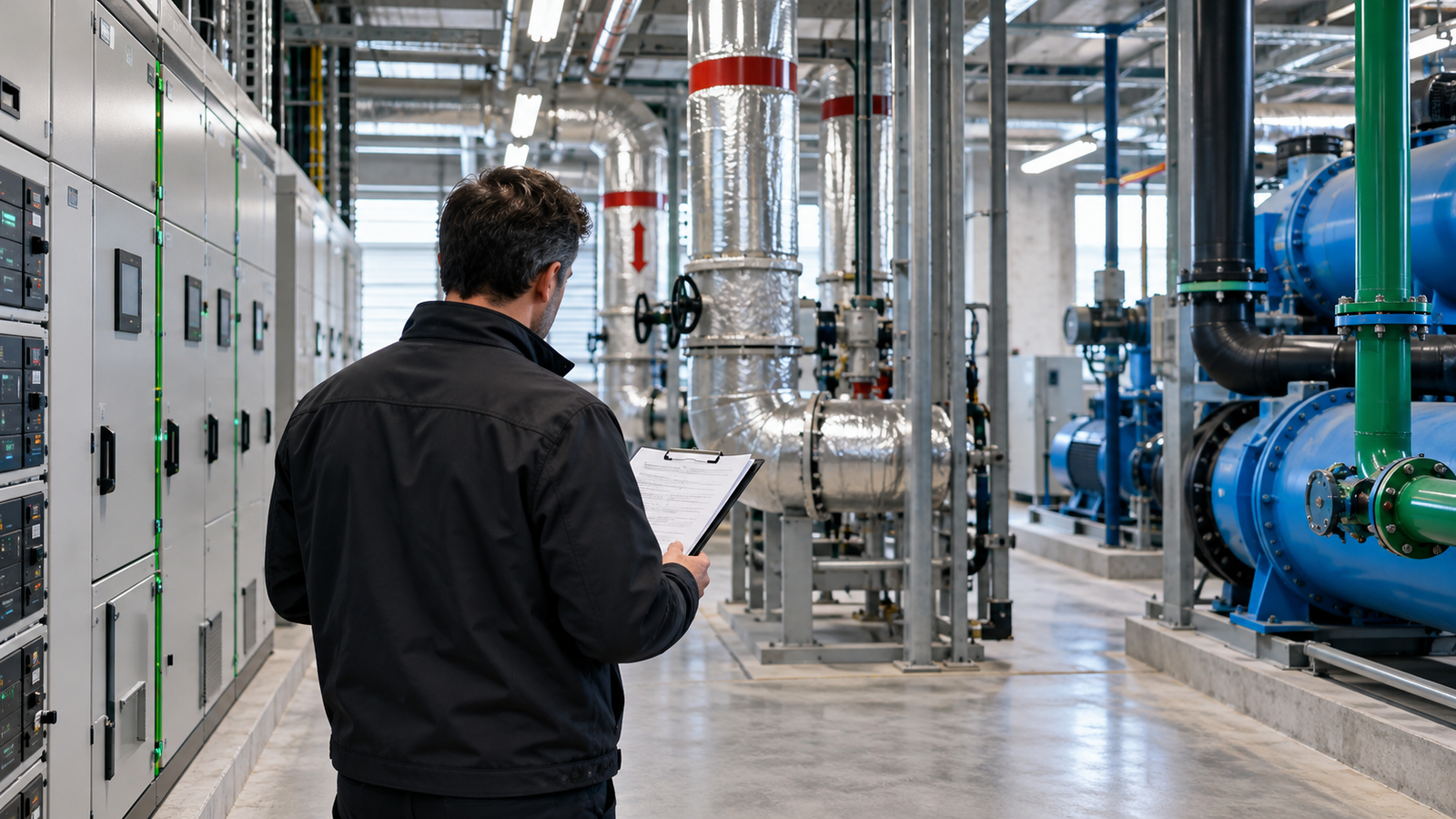
Scope 2 electricity and purchased energy emissions
Scope 2 Emissions Calculation: Build a Complete Purchased-Energy Ledger
A Scope 2 emissions calculation starts with every purchased-energy stream consumed inside the reporting boundary, not just the electricity account. Electricity, steam, heating and cooling ne…
Read article
Scope 2 electricity and purchased energy emissions
Scope 2 Emissions Examples: Six Situations That Change the Answer
Scope 2 emissions examples are useful when they reveal the fact that changes the answer. An electricity bill, a steam pipe and solar panels on a roof can all appear at the same factory, but …
Read article
Scope 2 electricity and purchased energy emissions
What Are Renewable Energy Certificates? A Practical Guide to RECs and Claims
A renewable energy certificate, or REC in the United States, represents the non-power attributes associated with one megawatt-hour of eligible renewable electricity generation delivered to t…
Read articleScope 2 electricity and purchased energy emissions
What Is Included in Scope 2 Emissions? A Boundary Checklist
What is included in Scope 2 emissions? Start with electricity, steam, heat and cooling that your organisation purchases or otherwise acquires and consumes within its reporting boundary. Scop…
Read article
Upstream freight and distribution carbon emissions
Air freight carbon emissions: how to measure and interpret a shipment
Air freight carbon emissions for a shipment are usually an allocated estimate of the flight activity associated with moving that cargo. The number depends on the shipment, route, aircraft se…
Read article
Upstream freight and distribution carbon emissions
How to calculate a freight carbon footprint from shipment records
A freight carbon footprint estimates greenhouse gas emissions for a defined shipment or transport activity. Start with the cargo and its route, then identify each vehicle movement and the fa…
Read article
Upstream freight and distribution carbon emissions
Freight Emissions by Mode: Compare Air, Road, Rail and Sea
Comparing freight emissions by mode is a purchasing decision about a delivery, not just a contest between aircraft, trucks, trains and ships. First establish what must arrive, where and by w…
Read article
Upstream freight and distribution carbon emissions
How to choose logistics emission factors that fit the activity
A logistics emission factor converts an amount of activity into estimated greenhouse gas emissions. The denominator tells you which activity to use. A factor per litre goes with fuel volume,…
Read articleUpstream freight and distribution carbon emissions
Logistics Emissions Calculation: A Defensible Method for Every Transport Leg
A logistics emissions calculation becomes useful when the reader can see which movements it covers, how each result was obtained and what remains missing. Start with the physical shipment ch…
Read article
Upstream freight and distribution carbon emissions
Scope 3 Category 4 upstream transportation and distribution examples
Scope 3 Category 4 upstream transportation and distribution examples are useful only when the reporting company and its relationship to the activity are clear. A truck heading toward a facto…
Read article
Upstream freight and distribution carbon emissions
Shipping Carbon Emissions: From Ocean Voyage to Cargo Estimate
A shipping carbon emissions figure is useful only when its reporting unit, fuel boundary and service coverage are clear. A sector inventory, a vessel total and an allocated cargo estimate an…
Read article
Waste generated in operations carbon emissions
Landfill emissions calculation: choose the right boundary before the formula
A landfill emissions calculation starts with the question being asked. A company estimating treatment of its operational waste, an operator estimating annual methane at a landfill, and a pro…
Read articleWaste generated in operations carbon emissions
Landfill Emissions Data: What the Numbers Can and Cannot Tell You
Landfill emissions data is useful only when the number stays connected to its source, period, method and physical coverage. A facility-reported annual estimate, a landfill gas project record…
Read article
Waste generated in operations carbon emissions
Recycling Emissions Factor: Match the Material, Process and Boundary
A recycling emissions factor is useful only when it describes the activity you are measuring. A value for collecting and sorting discarded material is not automatically a value for producing…
Read article
Waste generated in operations carbon emissions
Scope 3 waste emission factors: match the number to the treatment
Scope 3 waste emission factors should match the waste stream, measured or estimated quantity, final treatment route, activity unit, process boundary and exact dataset release. Category 5 con…
Read article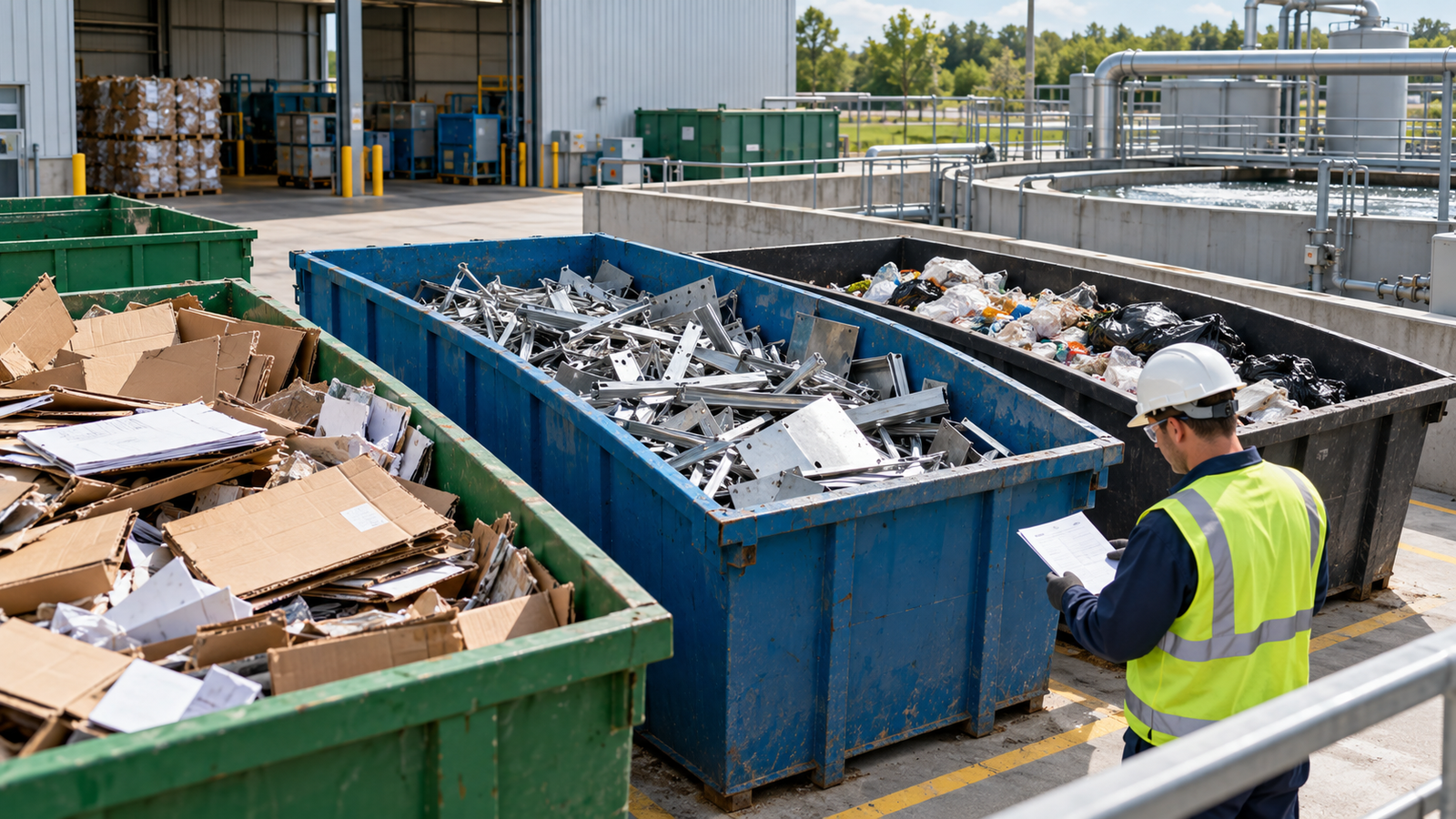
Waste generated in operations carbon emissions
Scope 3 waste generated in operations: build a Category 5 inventory that can be checked
Scope 3 waste generated in operations belongs in Category 5 when waste from the reporting company’s owned or controlled operations is treated by third parties. Build the inventory by connect…
Read article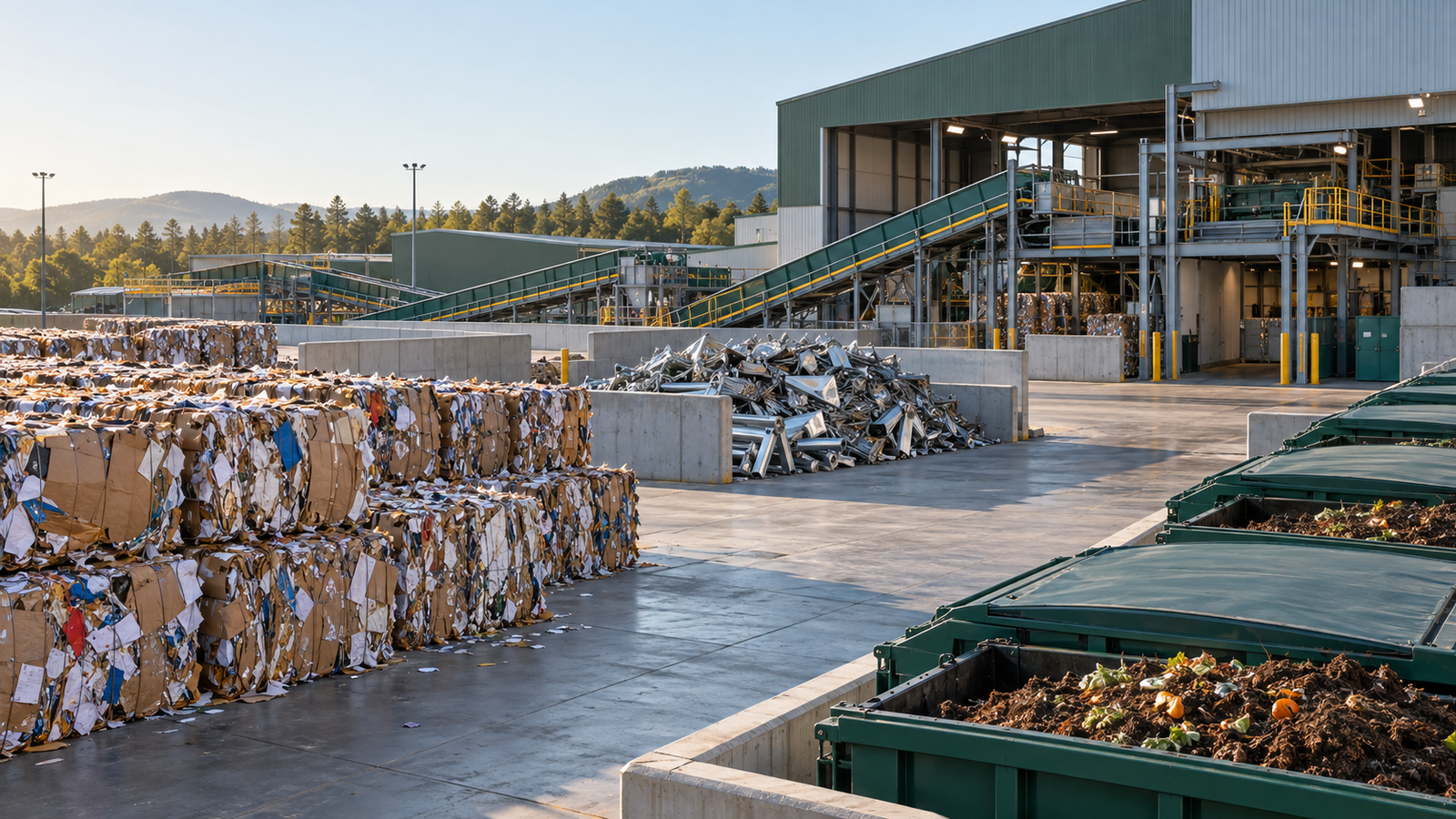
Waste generated in operations carbon emissions
Waste Management Carbon Emissions: Follow the Material to Its Treatment
A tonne collected for recycling is not necessarily a tonne recycled. Sorting can send part of a load to another treatment route, and a collection invoice may stop at a transfer station. To e…
Read article
Waste generated in operations carbon emissions
Wastewater Treatment Carbon Emissions: Map the Gases, Energy and Boundaries
Wastewater treatment carbon emissions come from different activities: biological releases of methane and nitrous oxide, fuel burned at the site, electricity bought to run equipment, and any …
Read articleNo articles match your search. Try another term or clear the filters.