
Voluntary Carbon Market Insurance: What a Buyer Must Check
Original synthetic paper-cut editorial illustration. Airy green-blue editorial scene with a sapling, separate policy document, identifiable credit tokens and a reviewing buyer. The protective arc covers the document and tokens, not the atmospheric outcome. No text or certification symbol.; verify the specific credit and policy terms Spatial grouping, branches, proportions or directional paths carry the claim with concise labels.
Diagram text description
A buyer agrees to purchase credits from a project, then hears that the units may not arrive or may later be cancelled. The project may be carefully monitored, yet a financing loss can still occur. Insurance might transfer a specified part of that loss. It cannot make a weak credit sound, guarantee a public climate claim or replace checking the registry and contract.
The practical question behind voluntary carbon market insurance is narrow: whose financial interest is covered, in which identified credits, against which event, for how long and up to what amount? A product page can show that a form of cover exists. Only the actual quote, schedule and executed policy wording can answer those questions for a particular transaction. The distinction matters because non-delivery, reversal, invalidation and a borrower's non-payment are different losses.
This guide is for procurement and sustainability teams preparing a review with an insurance broker, counsel and project counterparty. It explains what to put in the decision file and what not to infer from the insurance label. It is not a recommendation to buy a policy or an opinion about any individual credit.
What carbon-credit insurance can and cannot do
Insurance is an agreement to respond to a defined financial loss after a defined event, subject to conditions. For example, a cancellation policy might pay a stated amount if specified issued credits are invalidated by a registry and the insured has no adequate replacement or remedy. A forward-delivery policy instead concerns units expected under a future contract. Neither should be described simply as “the credits are insured” without naming the insured risk.
Carbon-credit integrity is a different inquiry. Additionality, the baseline, monitoring, permanence, safeguards and ownership are established through a crediting program's methods and project evidence, not through the existence of an insurance contract. Insurance underwriting may examine those matters, but the buyer cannot infer a project's quality or its suitability for a company claim from an insurer's willingness to offer a product. Likewise a cash payment following a loss does not itself create replacement tonnes or authorize the original climate statement.
The insurer’s contract and the project’s crediting evidence answer different questions. There is no connector turning an insured exposure into proof of credit quality or additionality.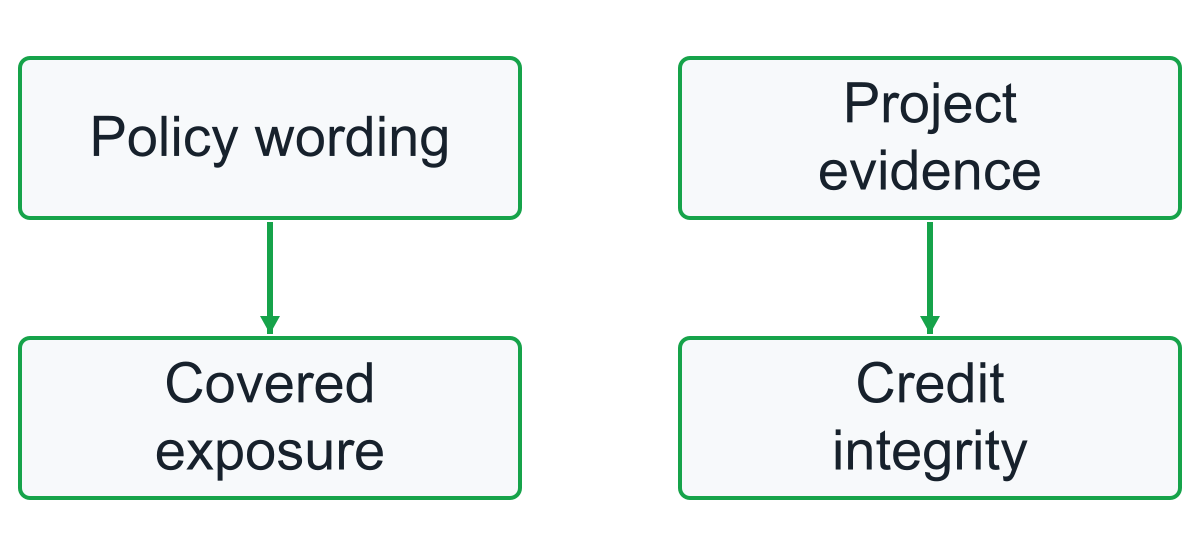
Diagram text description
The buyer's first written test is therefore to finish a sentence: “If [specified event] affects [specified credits], [named insured] can claim [specified remedy] up to [specified limit], subject to [conditions].” If the team cannot fill those blanks from the proposed wording, it does not yet know what is being transferred.
Whose loss is actually insured?
A carbon transaction has several parties who could lose money in different ways. A project developer may want protection against a reversal or credit invalidation that forces it to replace units. A seller may want cover embedded in a credit sale. A corporate buyer may want protection after paying for identified units. A lender may care about a borrower's ability to repay financing linked to future carbon revenue. One party's policy does not automatically make every other party an insured.
Ask who is named as policyholder and who can receive a payout. If cover is described as traveling with a credit, inspect the transfer mechanism and any notification or endorsement requirement. If a marketplace advertises “insured credits,” identify the underwriting carrier, the actual insured, and the conditions under which an end buyer can enforce a right. Do not treat an advertisement as evidence that a buyer has standing under a policy.
The outer boundary includes the transaction’s parties. Only the named insured and specified interest are assumed within the policy description; seller, buyer or lender participation alone does not establish cover.
Diagram text description
The financial interest should also match the stage of purchase. Before issuance, a buyer's exposure may be an advance payment under a delivery contract. After issuance and transfer, it may be loss in identifiable registry units. After retirement, a later scientific or legal challenge can raise a different issue about a public statement. These are not interchangeable events, so describe the stage before choosing a product category.
Which credits and events are on the policy schedule?
A policy schedule should connect the contract to the actual credits or future delivery obligation. An insurer's current reversal-and-invalidation product overview illustrates the kind of specificity possible: registry, project ID, vintage and serial-number range can identify issued units. Where the risk is a future delivery, the relevant purchase or delivery contract and milestone dates may matter instead. These are examples of schedule fields, not proof that every insurer uses the same form.
Check whether the schedule matches the purchase agreement and registry record exactly. A changed vintage, split batch, transferred holding account or replaced serial range can leave a mismatch even if everyone calls the project by the same name. Keep the executed schedule and subsequent endorsements with the corresponding credit record. If the contract promises “equivalent credits,” determine who decides equivalence and how replacement quality, vintage, timing and claim eligibility are tested.
The inner range is an illustrative identified subset, not a statement about a real policy. Registry, project, vintage and serial details must match the actual schedule; a general project name is not enough.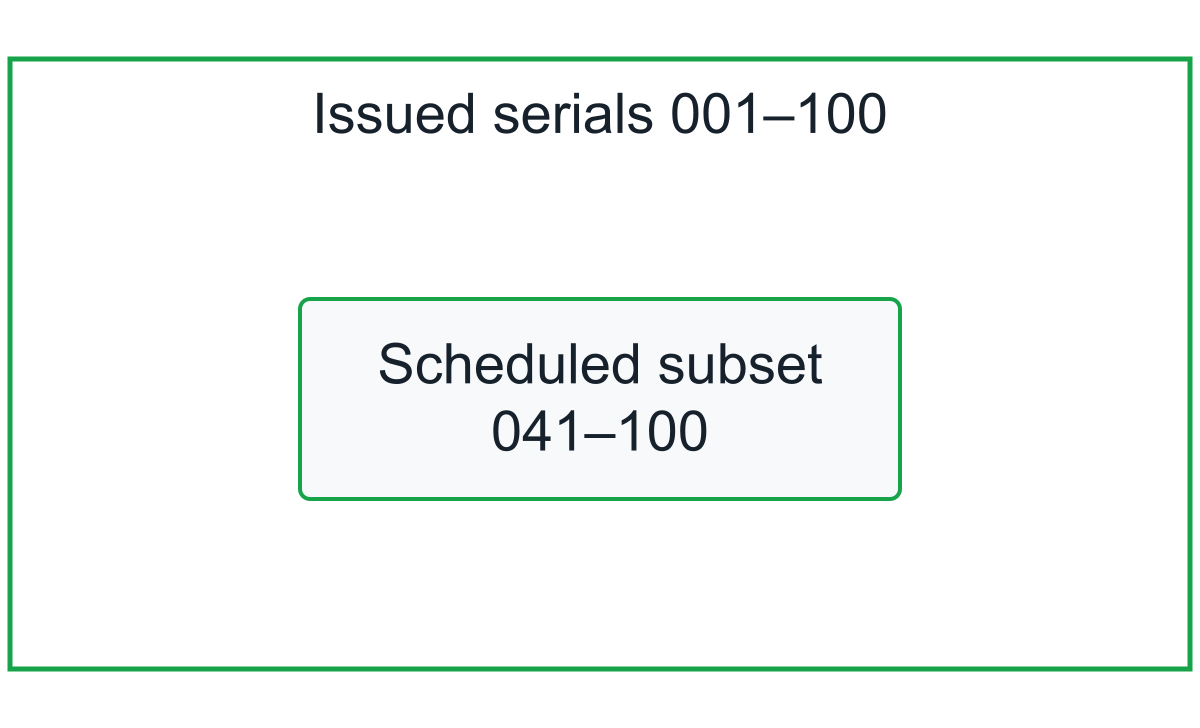
Diagram text description
Then write the trigger in ordinary language. Does a registry need to cancel credits? Is a verification delay enough, or must delivery fail after a cure period? Does the policy cover loss from a specified counterparty default? What must the insured show about its own loss and attempts to recover from the developer or registry mechanism? The trigger determines whether the practical problem the buyer fears is actually the one covered.
How do reversal and invalidation protection differ?
A reversal concerns carbon previously stored being released back to the atmosphere: fire or a change in land management can release carbon held in a forest project, for example. Invalidation concerns a credit's status or validity under the relevant program, which may follow methodological, monitoring, ownership or other defects. Both can lead to cancellation or a demand for replacement, but they need not have the same contractual treatment. An insurer's public overview may group them; the signed wording determines which events and perils are included.
Imagine two credits with the same project name. One is in a vintage whose registry units are cancelled after a documented reversal. The other remains active but a buyer questions the project's baseline. The first may resemble a stated cancellation trigger. The second is not automatically an insured loss merely because the buyer is uncomfortable. A dispute about environmental integrity, an adverse article or a revised company claim could fall outside a policy that pays only after a specified registry act.
The left path is release of previously stored carbon. The right concerns validity under programme rules. Neither arrow ends at an insurance payout: the applicable cancellation event, trigger and policy conditions must be established separately.
Diagram text description
Ask the broker or insurer to point to the exact trigger clause and the evidence needed to prove it. Note any requirement that a registry determination be final, a developer remedy be exhausted or a cancellation affect the precise scheduled serials. This avoids assuming that every project setback, quality concern or reputational problem generates a claim.
What should you read before treating a quote as cover?
A quote indicates proposed terms, not necessarily bound cover. Read the executed wording together with the declarations, schedule, endorsements and any exclusions. Identify when protection starts and ends; whether the value is the purchase price, a fixed stated amount or another measure; and whether a limit applies per unit, project, event or policy period. A deductible, co-insurance share or attachment point can leave a material amount with the buyer. Terms can differ by insurer, geography, credit type and underwriting date.
Check the remedy. Is it cash, replacement credits or an obligation to arrange a substitute? If cash is paid, who must source a replacement unit if the company still wishes to make its original climate claim? Ask how a registry buffer, developer warranty, contract remedy or recovery from another party interacts with insurance proceeds. A “double recovery” restriction or priority of remedies may affect when and how a claim is paid.
Finally, read notice and documentation conditions before an event occurs. The insured may need to preserve the purchase agreement, proof of payment, registry serials, transfer and retirement history, monitoring reports, registry action, correspondence and loss calculation. Obtain specialist interpretation of uncertain language. Product webpages from CFC and Oka describe available classes and illustrative terms, but they do not replace a particular signed policy.
Does a registry buffer already address the loss?
A crediting program may already have a mechanism for reversal risk. Verra describes pooled buffer accounts for agriculture, forestry and other land use projects and for geological carbon storage projects. Projects contribute units under program rules, and the buffer addresses specified reversals. Verra has also described a pilot using insurance or other funds for durability. These mechanisms operate under registry and project rules; they are not automatically a separate insurance contract held by a corporate buyer.
The buyer should map the remedy sequence. If a reversal occurs, which program determines its size? Which units are cancelled? Does the buffer replace or compensate under the applicable rules? What must the project developer do under the sale agreement? Only then ask what residual financial loss a commercial policy responds to. The answers depend on program, method, project, transaction and policy version; a single generic chart cannot decide them.
The first arrow connects a registry buffer to programme integrity, which may involve cancellation of buffer units under programme rules. The second connects the sale contract to its agreed counterparty remedy. The third connects insurance to the specified insured loss and conditions. These are separate relationships, not a payment order or a guarantee of buyer compensation.
Diagram text description
This exercise also prevents false reassurance. A buffer can address one defined permanence exposure but not, without more, a counterparty's missed delivery or a defect in a public claim. A policy may insure a financial interest while leaving the buyer's scientific and disclosure responsibilities intact. Keep registry rules, purchase contract and insurance wording as three separate documents in the review file.
Compare two offers by the loss each could leave with the buyer
Consider two hypothetical proposals for the same credit purchase. Offer A responds to cancellation of scheduled issued units. Offer B addresses a defined failure to deliver units under a forward contract. Their headings may both say carbon insurance, but they respond at different transaction stages. Comparing premiums before matching the exposure can select the cheaper answer to the wrong question.
Now suppose the buyer has paid an advance and issuance is delayed. There may be no issued serials to cancel. A cancellation-only proposal should not be assumed to cover that delay. A delivery proposal still needs its own deadline, cure period, insured loss and exclusions checked. This example identifies questions for the actual wording; it predicts no insurer's decision.
Table 1: scroll horizontally if needed.
| Proposed protection | Scenario to test against the wording |
|---|---|
| Issued-credit cancellation | Are these exact units scheduled, and has the required cancellation occurred? |
| Forward non-delivery | Has the defined delivery failure occurred after the applicable dates and conditions? |
| Lender non-payment | Is the insured exposure the borrower's debt rather than the buyer's credit purchase? |
Ask the adviser to explain the material uncovered case as well as the covered one. If two offers use different loss valuations, limits or remedies, a headline premium is not a like-for-like price comparison. Public product pages can identify available product classes, but only the proposed and executed documents establish the transaction's terms.
A commercial decision can still be made when some risks remain uninsured. The useful output is a known residual exposure and an agreed response, rather than a blanket statement that every project problem has been transferred.
Test a shortfall before relying on the policy label
Use a concrete delivery scenario to test the purchase. A buyer contracts for an illustrative 10,000 credits and pays an advance. Only 7,000 are delivered by the contractual date. The unit shortfall is 3,000, but that subtraction does not establish an insured monetary loss or a payable claim. A cure period, replacement delivery, contract remedy or policy exclusion could change the outcome.
Keep three quantities separate: units contracted, units delivered and the financial interest exposed. If the buyer paid only an advance, its cash exposure is not automatically the full contract price. If it received a refund or substitute units, the loss assessment must reflect the applicable terms. Multiplying 3,000 by a quoted market price without a valuation clause invents a payout basis.
The illustrative contract quantity is 10,000 units and delivered quantity is 7,000, leaving 3,000. Length represents units. Coverage, valuation, deductible and remedy are not calculated by this subtraction.
Diagram text description
Trace the event through the wording. Identify the insured party; determine whether the scheduled obligation is the one that fell short; check the deadline and any required notice; then identify the remedy and limit. The purpose is to find a missing connection before purchase, not to turn this example into a claims determination.
The strongest test changes one fact. If all 10,000 units arrive but 3,000 are later cancelled by the registry, the numerical count is similar while the event is different. Delivery and cancellation clauses must be examined separately. A policy suitable for one stage may leave the other outside its terms.
Record the unresolved consequence in practical language: the purchase team may need a different cover, a stronger contractual remedy, a smaller advance or an explicit decision to retain the risk. Those are commercial alternatives for specialist review, not outcomes a carbon calculator can select.
Keep a partial credit transfer matched to its schedule
A seller transfers part of a scheduled holding to a buyer. The remaining holding and the transferred units now belong to different parties. The fact that the seller previously held a policy does not establish that the buyer acquired enforceable cover for its portion. Check the actual transfer provisions, named insured or beneficiary, and any required notification or endorsement.
For an illustrative batch, a policy schedule identifies serials 001 through 100. The seller transfers 041 through 100 and retains 001 through 040. The buyer receives 60 units, while the seller retains 40. Those counts help reconcile the transaction; they do not establish which party is insured. The policy must explain whether and how its protection follows the transferred units.
The inclusive serial ranges are illustrative and contiguous. Buyer holdings 041–100 contain sixty units; seller holdings 001–040 contain forty. Transfer of units does not by itself transfer insurance rights; actual wording and endorsements govern.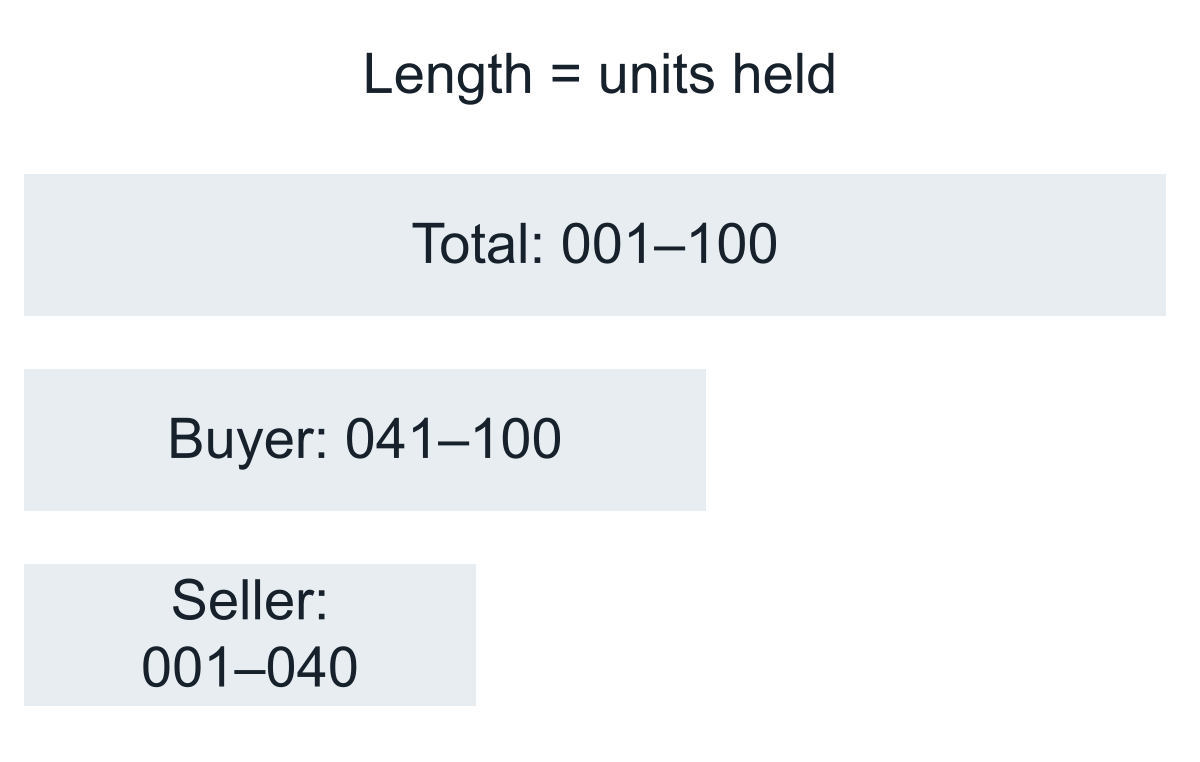
Diagram text description
If an endorsement names the new buyer but lists the wrong range, a matching project name is not enough. Resolve the identifiers before representing those units as covered. If a transfer condition requires notice, determine who sends it and what confirmation establishes completion. Preserve both the prior schedule and the executed amendment so the change can be reconstructed.
Retirement introduces a separate status change. Depending on the wording, a policy may address owned or retired units, but neither status should be inferred from a sales receipt. A current registry record, purchase agreement and policy schedule answer different questions; reconcile their identities and dates instead of treating one as a substitute for the others.
Decide which exposure remains after the remedies
The purchase decision should end with a clear residual risk. A defined policy may transfer part of a financial loss while the buyer retains a deductible, a timing gap, replacement sourcing or a separate disclosure issue. Those remaining responsibilities can matter as much as the headline cover.
For the shortfall example, first establish what the seller must deliver or repay and when. Then ask the adviser which remaining loss the proposed insurance addresses. If a cash remedy would leave the company without credits needed for its intended claim, plan for that consequence separately; money does not itself replace a retired unit.
Proceed on the basis of the executed transaction documents and specialist interpretation of material uncertainties. The useful conclusion is specific: which exposure is transferred, which remains with the buyer, and what action follows if the event occurs. It is not a general assurance about the environmental quality of the project.